
Best Pinterest Boards for Inspiration (and How to Find More Like Them)
If Pinterest ever felt like a giant mood board you could get lost in for hours, you’re not wrong. Still, in 2026 it works less like social media and more like a visual search engine. That changes what “best Pinterest boards for inspiration” really means.
The best boards aren’t just pretty. They’re curated, easy to skim, and organized around a clear theme. They also come from people who pin with intent, like designers, DIY creators, and brand builders, not random re-pinners.
Below, you’ll find specific Pinterest boards to follow, grouped by what you need right now, plus a simple method to find more boards that match your taste. If you want to save ideas faster, start by following expert curators and choosing boards with strong titles and clear sections.
The best Pinterest boards for inspiration, sorted by what you need right now
Sometimes you need a color direction. Other times, you need a full plan. Use this list like a menu, then follow the boards that match your current project.
If you want home-style ideas that feel lived-in
Jungalow Tips and Tricks (Justina Blakeney) is a strong choice for bold, warm interiors with a relaxed vibe. It helps if you’re decorating a room and feel stuck choosing patterns, plants, or textures. Pin room corners, plant styling, and layered textile ideas, then copy the mix, not the exact items.
decor8 (Holly Becker) leans more modern and editorial. It works well when you want cleaner lines, calmer palettes, and design that still feels human. Pin small-space layouts, lighting ideas, and styling shots that show proportion.
Apartment34 is useful when you want a more polished, curated look without going full luxury. It blends home, fashion, and travel inspiration, which is great if you’re trying to shape an overall lifestyle. Pin entryway ideas, table settings, and simple room palettes you can repeat.
If you need color help right now
Design Seeds (Jessica Colaluca) is the go-to resource when you’re tired of guessing colors. The palettes often draw on nature and everyday objects, so the combinations feel “right” quickly. Pin palettes that match your room, brand, or event theme, then replicate the hex-like feel by choosing 1 main color, 1 supporting color, and 1 accent color.
Quick tip: Save color palettes into sections like “warm neutrals” or “blue and brass” so you can find them later.
If you’re building creative work, not just decorating
Creative Advertising (Kevin Reis) is packed with poster-style inspiration, campaign concepts, and smart visual ideas. It’s helpful if you design, write, or market anything and need fresh layouts or headline approaches. Pin concepts and compositions, then note what makes them work (contrast, whitespace, punchy type).
Behind the Scenes (Rebecca Atwood) is great for anyone who likes the process, not only the final image. Expect a focus on color, textiles, and how design gets made. Pin texture references, pattern scales, and production details when you want your work to feel more tactile.
If you want DIY you can actually finish
Inspired by Charm (Michael Wurm Jr.) is a reliable brand for DIY and lifestyle, especially for seasonal decorating. It helps when you want projects that look good yet remain doable. Pin step-by-step visuals, supply lists, and holiday tablescapes you can adapt.
If you want a workspace that makes you want to sit down
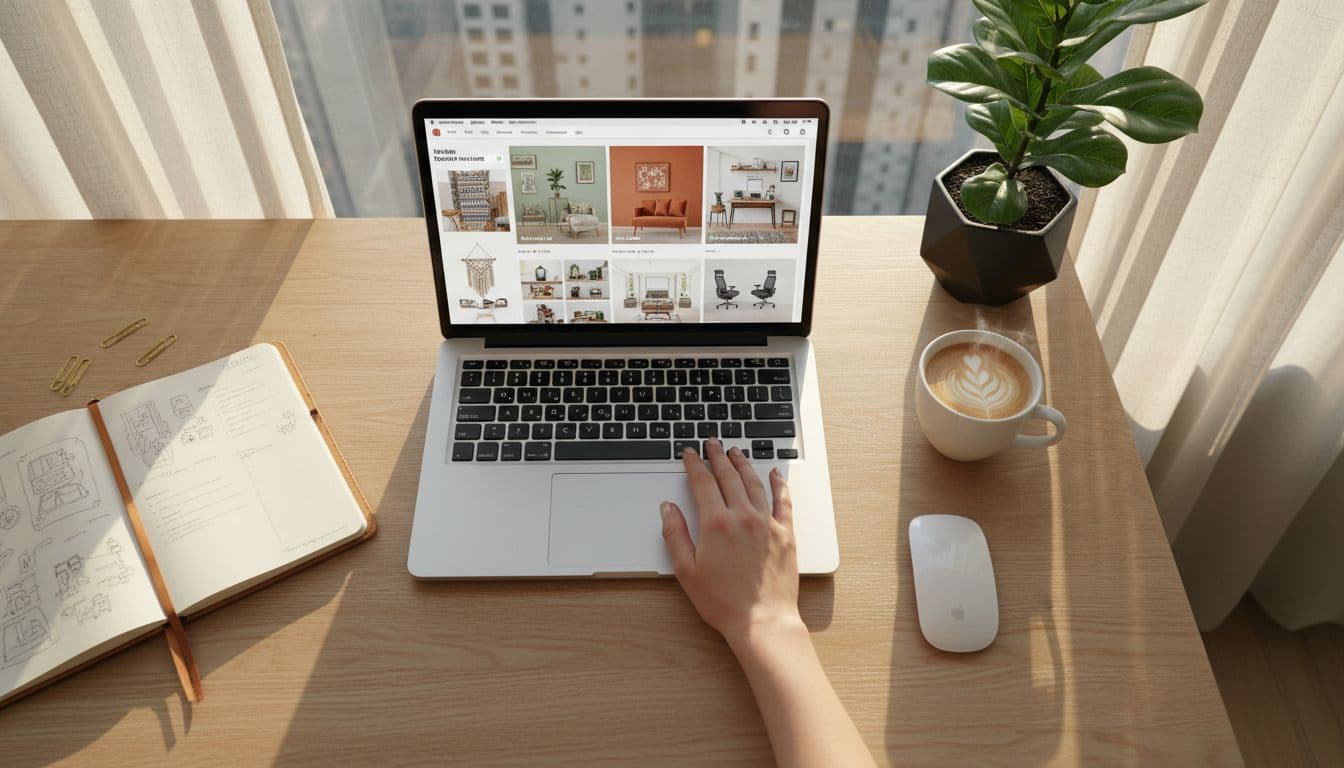
Girl Boss Office Inspo (Melanie Duncan) is for building a workspace that feels both functional and motivating. It’s useful if you’re rearranging a home office, setting up a studio corner, or refreshing your desk setup. Pin desk layouts, storage ideas, and lighting setups, then copy the “zones” (work, storage, display).
If you’re a maker or small shop owner
Everything Etsy (Etsy Business) focuses on handmade business ideas and craft room organization. It’s practical when you’re setting up a packing station, planning product photos, or organizing supplies. Pin shelving ideas, labeling systems, and simple display setups.
How to find high-quality inspiration boards (and avoid messy, random pin dumps)
Great boards feel like walking into a well-run shop. Messy boards feel like a junk drawer. The difference usually comes down to search terms, curator quality, and organization.
Start with the Pinterest search bar. Type a short phrase, then pay attention to the suggested keywords that appear. Those suggestions reflect what people already search for, so they often lead you to better boards. Add simple qualifiers to refine results, such as “aesthetic,” “tips,” “ideas,” “small space,” “neutral,” “color palette,” or “DIY steps.” For example, “boho living room ideas” will usually beat “boho decor” because it signals intent.
Next, check who runs the board. Niche curators are gold. Designers, photographers, architects, and established creators tend to pin with a consistent point of view. On the other hand, boards with thousands of unrelated pins can waste your time, even if a few images look good.
Also, look for boards that use sections. Sections are a subtle sign of care because the curator has organized ideas into topics such as “lighting,” “kitchens,” “entryway,” or “paint colors.” That makes it easier to scan and save with purpose.
Before you commit, open a few pins and click through. If lots of links are broken or lead nowhere, skip the board. Inspiration is fun, but dead links kill momentum.
Here is a quick checklist you can scan before you follow a board:
- Clear title that matches a real search term (not inside jokes).
- Focused theme, with pins that belong together.
- Sections that sort ideas into subtopics.
- Working links that lead to real sources.
- Consistent pin quality, not a mix of random memes and product spam.
Finally, keep your followers aligned with what you make or plan. If you’re using Pinterest for business, overly personal boards can confuse your audience and your own feed. When a board solves a personal problem (meal plans, family trip plans), keep it secret.
Save ideas like a pro: build inspiration boards that actually help you take action
Following the best Pinterest boards for inspiration is step one. Step two is saving in a way that turns pictures into decisions.
Think of your saves like a well-labeled pantry. If everything gets tossed onto one shelf, you won’t cook. Instead, use a simple three-board system tied to action:
First, create a “Best of” board where you pin your top finds. This becomes your quick reference when you’re busy. Next, set up project boards that align with outcomes, such as “Living room layout,” “Brand color palette,” “Spring porch DIY,” or “Product photo styling.” Then add support boards for related topics your brain needs to complete the task, such as “Lighting ideas” or “Storage solutions.”
Inside each board, use sections to sort by decisions. For example, a room board can have sections for “layout,” “paint,” “rugs,” and “lighting.” A business board can have “packaging,” “studio setup,” and “launch graphics.” Keep it tight, so you can find what you saved in 10 seconds.
If you can’t explain why you saved a pin, it probably doesn’t belong on an action board.
Turn Inspiration Into a Plan
The best Pinterest boards for inspiration save you time because someone else has already curated the best content. Start with proven creators, then use more targeted search terms to find more boards that fit your style. After that, save with a simple system, so inspiration turns into real plans.
Pick one category today: home, color, DIY, or workspaces. Follow 2 to 3 boards, then sort your recent saves into sections. You’ll feel the difference the next time you sit down to actually start your project.