

Quick Answers
Yes. A simple website, a clear topic, and useful content is enough to get started.
Pick a niche you won’t get tired of. If you can stick with it, you’re ahead of most people.
Create helpful content, recommend useful tools, and earn when someone takes action.
No. Most tools handle setup. What matters is learning how to create useful content.
It takes time. You’re building something that grows, not flipping a switch.
Consistency. Publish, learn, adjust, repeat. That’s where results come from.
How to Start a Business From Home With Wealthy Affiliate
If you’re trying to start a business from home but don’t have tech skills, a big budget, or a clear plan yet, affiliate marketing is one of the simplest ways to begin. I say that because you’re not creating your own product or dealing with shipping. Instead, you recommend products or services people already want, and you earn a commission when someone buys through your link.
That sounds simple, and it is, but it still takes real work. You need a niche, a website, content people trust, and a steady plan for getting traffic. That’s where Wealthy Affiliate stands out, because it puts the training, website tools, hosting, keyword research, AI writing help, and community support in one place.
For beginners, that matters a lot. It cuts down the usual mess of trying to piece together random courses, plugins, and tools from all over the internet. If you want a closer look at the platform itself, this latest Wealthy Affiliate features overview gives a helpful snapshot of what’s available now.
The honest truth is this isn’t fast money, and it doesn’t work like magic. Still, if you’re willing to learn, publish content, and keep showing up, affiliate marketing can become a real home-based business you build step by step.
Understand how the business model works before you begin
Before you try to start a business from home with affiliate marketing, it helps to know what you’re actually building. A lot of beginners think they need their own product, a warehouse, or some kind of fancy sales system. You don’t.
What you’re really building is a helpful content-based business. You publish useful pages, earn trust over time, and recommend products that fit what your readers already need. When someone buys through your link, you earn a commission. Simple model, but not always easy. The work is in the content, not in shipping boxes.
What affiliate marketing looks like in real life
Here’s the plain-English version. Let’s say you start a pet website from home and write articles for dog owners. One post might be about how to choose the best dog bed for an older dog. Another might compare washable beds for big breeds. You’re helping first, not pushing.
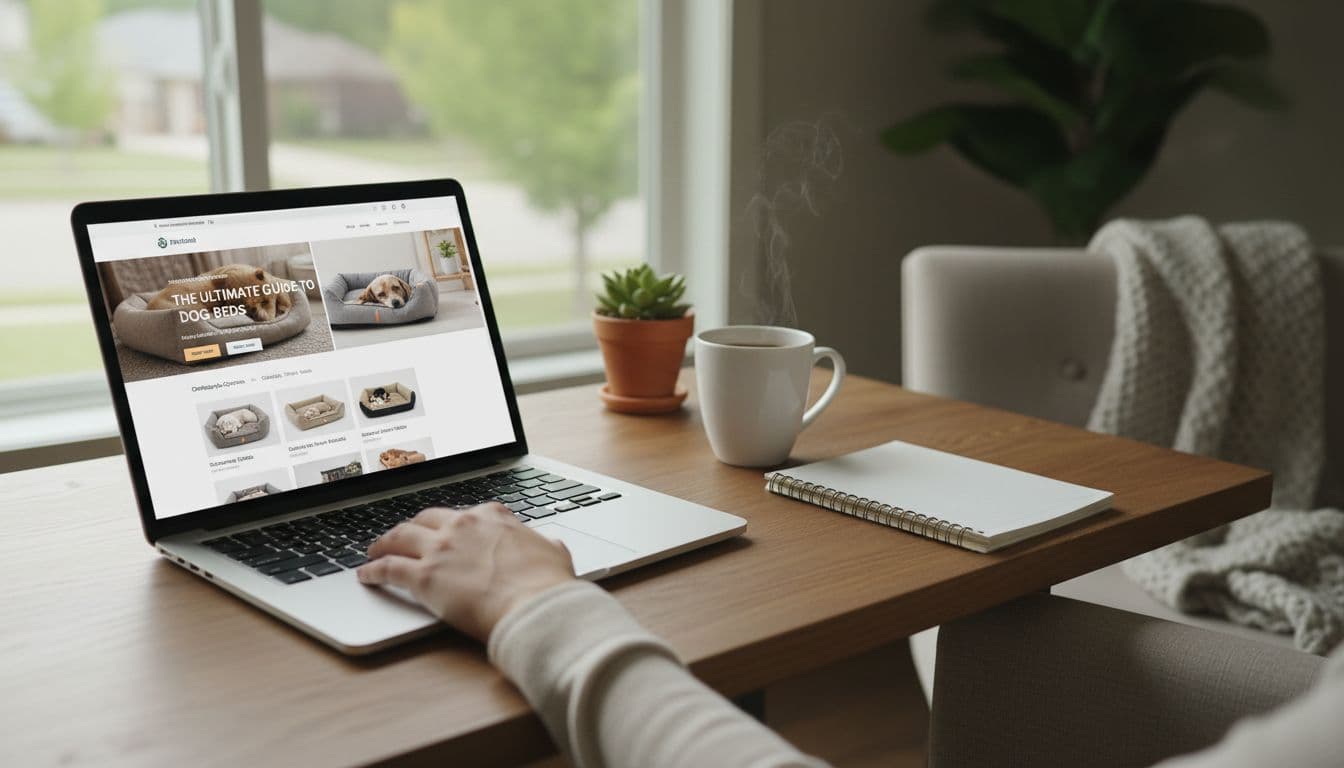
Inside those articles, you can link to dog beds sold by a company with an affiliate program. If a reader clicks your link and buys, you get paid a small commission. You didn’t make the bed. You didn’t ship it. You didn’t handle returns. Your job was to help the reader make a smart choice.
That’s why this model makes sense for home-based beginners. You’re not managing stock or dealing with customer service calls all day. Instead, you’re building digital assets, one article at a time.
The key parts work together like this:
- Content brings in readers from search.
- Trust makes them listen to your advice.
- Affiliate links turn that attention into income.
If you want to see what that can look like at scale, these examples of ideal affiliate marketing websites show the model in action.
The real business is not the link itself. It’s the helpful content that makes the link matter.
What Wealthy Affiliate gives you in one place
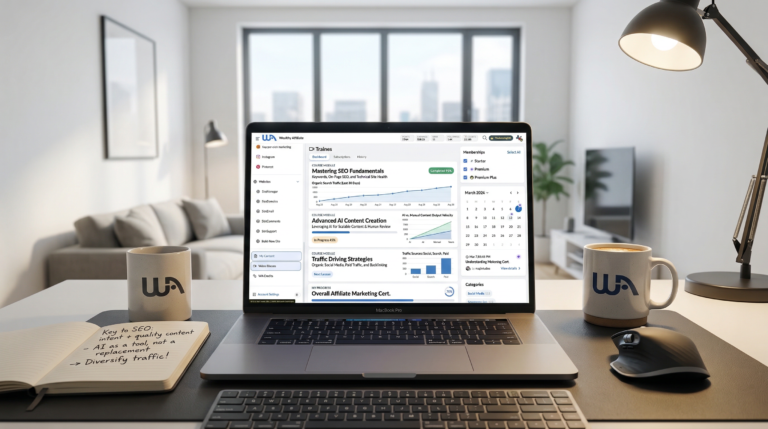
This is where Wealthy Affiliate can be useful, especially if you don’t want to piece everything together on your own. Instead of buying separate tools for training, hosting, keyword research, and setup, the platform puts the basics in one place.
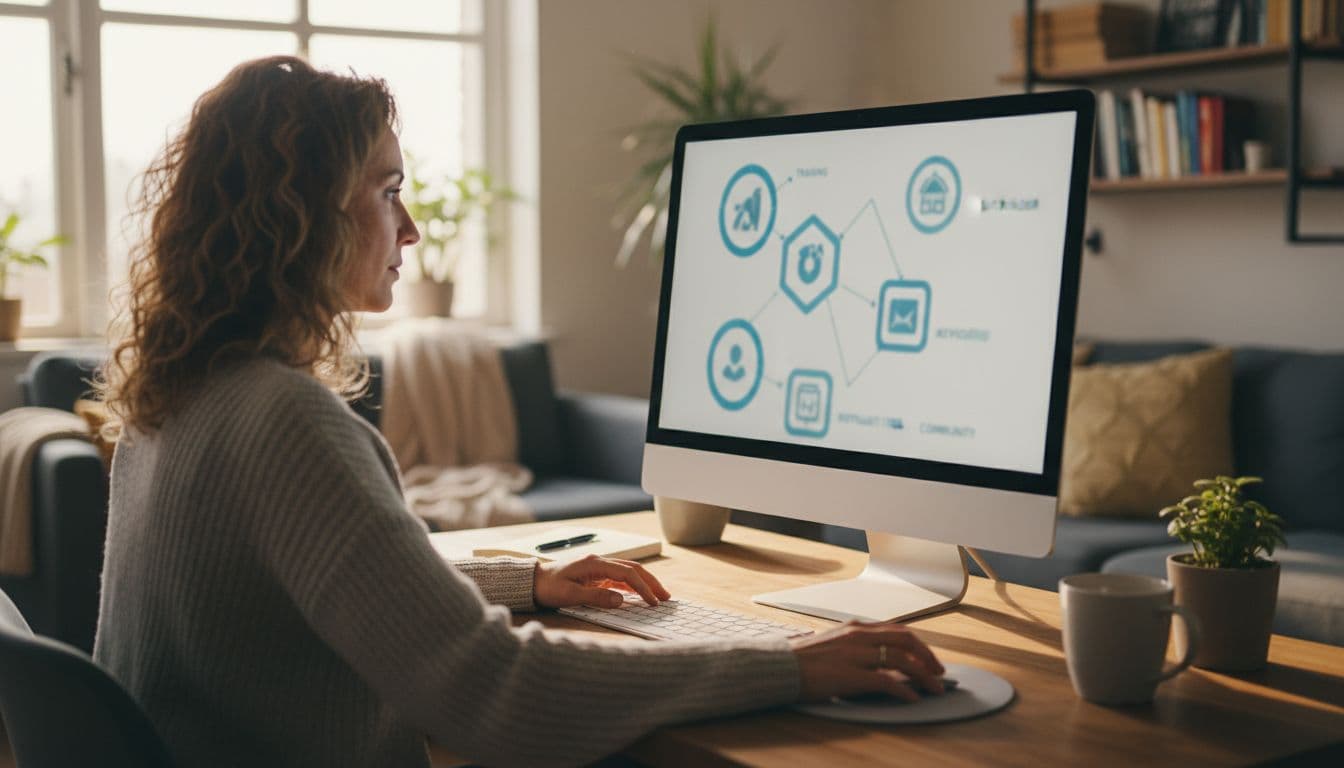
As of 2026, the platform commonly includes:
- Starter access, which is usually free and gives you a way to test the platform without a credit card
- Training paths, built to walk beginners through niche selection, content, traffic, and monetization
- WordPress website setup, so you can launch a site without fighting with technical stuff
- Hosting, which means your website can live inside the platform instead of needing a separate host
- AI tools, for content ideas, branding help, and faster drafting
- Keyword research, so you can find topics people actually search for
- Affiliate program search, which helps you find offers to promote in your niche
- Community help, including live chat, member feedback, and support when you get stuck
Current pricing, at the time of writing, commonly includes Starter for free, Premium at $49 per month or $497 per year, and Premium Plus at $99 per month or $697 per year. That gives you a clear ladder, from trying it out to building something more serious. If you want to compare the plans, the official Wealthy Affiliate pricing plans lay them out clearly.
Set expectations for time, cost, and effort
This part matters more than people think. Affiliate marketing can help you start a business from home, but it rarely pays off in days. Most people see progress in weeks or months, not overnight. Sometimes the first win is just getting your site live and publishing that first article. That still counts.
The good news is that many beginners can get started in an hour or two. You can pick a niche, open an account, and set up a simple WordPress site pretty fast. After that, the real work begins. Growth comes from publishing consistently, learning what your audience wants, and testing what actually gets clicks and sales.
Recent reviews tend to repeat the same pattern. The pros are clear: beginner-friendly training, all-in-one tools, and a helpful community. The cons are real too: ongoing monthly cost, a lot to learn at first, and mixed opinions on some older lessons that may not feel as fresh as the newer parts of the platform.
That doesn’t make the model bad. It just means you should treat it like a real business. Slow at first, then stronger with time. If you go in with honest expectations, you’ll make better choices and stick around long enough to see the work compound.
Choose a niche you can stick with and that people will search for
If you want to start a business from home that lasts, your niche has to work on two levels. First, you need to care enough to keep showing up. Second, people need to be looking for help, answers, or products in that space. That sweet spot matters more than chasing whatever is hot this week.
Start with topics you enjoy, problems you understand, or products you already use
A lot of beginners trip up here. They pick a random trend because it looks profitable, then run out of things to say by week two. I’ve seen that happen more than once, and it usually ends the same way, with a half-built site and no momentum.
Instead, start with what feels familiar. Think about hobbies, daily routines, work skills, health goals, parenting struggles, home office gear, or apps you already rely on. If you can talk about it without forcing it, that’s a good sign.

Here’s a simple way to test a niche before you commit:
- Real audience need: People want advice, solutions, comparisons, or product help.
- Clear product options: There are affiliate offers, tools, or services tied to the topic.
- Plenty of content ideas: You can picture 20 to 30 helpful posts without straining.
That last point is bigger than it sounds. A solid niche should feel like a garden, not a single flower.
Use Wealthy Affiliate tools to narrow your idea
This is where Wealthy Affiliate helps keep the guesswork down. The training can help you define your audience, while the niche lessons on choosing your first niche push you to get more specific.
Then you can use keyword research to see if people are searching for the kind of help you want to create. The built-in research tools and the keyword research with Jaaxy guide make it easier to spot topics with demand, but less competition.

AI suggestions can also help you brainstorm angles you may miss at first. And if your niche has affiliate programs built around software, wellness, finance, or remote work tools, that’s a strong sign you’re looking at a beginner-friendly path.
Avoid niche mistakes that slow new affiliates down
The biggest mistake is going too broad. “Fitness” is broad. “Home workouts for busy moms” is much easier to build around. Focus gives your site shape, and shape builds trust.
Another mistake is picking a niche that looks profitable but feels painful to write about. If every article feels like homework, you won’t stay with it long enough to grow. A smaller, clearer niche usually beats trying to talk to everyone.
Focus wins because it makes your content clearer, your audience stronger, and your next step easier to see.
Start narrow, help a specific person, and expand later. That’s a much better way to build something real from home.
Build your home-based affiliate website step by step
Once you join, the next part is usually the part people overthink. I did too. It sounds technical until you see the steps laid out in order.
The good news is that building your first site inside Wealthy Affiliate is more like filling in blanks than building a machine from scratch. You pick your setup, name your site, create a few key pages, and then follow the training one lesson at a time. If you want to start a business from home without getting buried in tech, this is where the path starts to feel real.
Create your account and pick the right Wealthy Affiliate plan
The Starter plan is a fair place to begin if you’re still testing the waters. It gives you a way to look around, try the platform, and get through the first lessons without pulling out your card right away. For a lot of beginners, that’s enough to answer the big question: Do I even like this kind of work?
If you’re curious, the What to expect from WA Starter overview gives a solid picture of how the free access works.
Still, Starter is more of a trial run than a full build-out. As of early 2026, it includes one website, limited beginner training, and lighter access to tools and support. That works well if you want to click around, set up a test site, and see how the dashboard feels.
Upgrade when you’re ready to build for real, not just browse. Premium makes more sense when you want full training, more websites, stronger keyword tools, and ongoing help. Premium Plus is usually for people scaling harder or managing several sites at once, not most brand-new users.

A simple way to think about it is this:
- Starter fits testing and early setup.
- Premium fits building one solid business.
- Premium Plus+ fits growth, extra tools, and multiple projects.
Choose a domain name and launch your WordPress site
Your domain is your website address, the name people type in to find you online. It doesn’t need to be clever enough to win awards. It just needs to be clear, simple, and easy to remember.
Try to choose something brandable, not boxed in. For example, smartpupcare.com gives you room to grow, while bestblueleashesforlabs.com painting you into a tiny corner. Shorter is usually better, and easy spelling matters more than being fancy.
Wealthy Affiliate helps here by offering domain ideas, setup help, and built-in hosting through its managed WordPress hosting. That means you don’t need to buy hosting somewhere else first and then figure out how to connect everything. You can move from idea to live site in one place.

Most importantly, you do not need coding skills. If you can use a web form, you can launch a WordPress site here. That’s a big relief, because the last thing a beginner needs is to spend three hours wondering what DNS means.
Set up the pages every new affiliate site needs
A brand-new site feels more trustworthy when the basics are in place. Before you worry about fancy design, create the core pages visitors expect to see.
Start with these:
- Home: A simple welcome page that tells people what your site helps with.
- About: A short story about who the site is for and why you created it.
- Contact: A clear way for readers or brands to reach you.
- Privacy Policy: A basic page that explains data use and cookies.
- Affiliate Disclosure: A clear statement that you may earn from recommendations.
Keep your categories simple too. Two or three focused categories are enough at first. If your site is about home workouts, for example, you might start with equipment, routines, and recovery. That gives your content structure without turning the menu into a junk drawer.
Also, build a clean main menu from day one. When people can quickly find your About, Contact, and main topics, your site feels more real and less like a half-finished side project.
Trust starts with the small details. A simple, clear site beats a flashy confusing one every time.
Follow the training instead of guessing your next move
This part saves a lot of wasted time. Instead of jumping between random YouTube videos and blog posts, follow the built-in lessons in order.
For most beginners, the Online Entrepreneur Certification is the better starting point because it walks through niche choice, site setup, content, and traffic in a steady way. Affiliate Bootcamp is there if you want training that centers on promoting Wealthy Affiliate itself while learning the same core skills.
The nice thing is that the lessons reduce that foggy feeling of not knowing what comes next. You finish one task, then move to the next. That sounds basic, but when you’re brand new, structure is half the battle.

If you get stuck, you’re not left staring at the screen alone. Live classes, community chat, and member feedback can help you keep moving. And that matters, because most beginners don’t quit from lack of potential. They quit because they get overwhelmed.
So take the next step in order, not all at once. That’s how you build a home-based affiliate site that actually gets finished.
If you’re still figuring out how all of this fits together, it helps to see it in one place. Training, website setup, keyword research, and content tools can get scattered fast.
That’s why a platform like Wealthy Affiliate can make the early steps feel a lot clearer. You can look around, test things, and see how it works without committing right away.
Create helpful content that brings traffic and builds trust
If you want to start a business from home with affiliate marketing, this is the part that matters most. Content is what brings people in, answers their questions, and gives them a reason to trust you. A good post should feel like help, not a sales pitch.
That shift took me a while to understand. At first, I thought the goal was to get links on the page. It isn’t. The real job is to solve a problem so well that the right click feels like the next obvious step.
Start with simple content types that are easier to rank and write
When you’re new, don’t try to write the most advanced post on the internet. Start with formats that are clear, useful, and easier to finish. In most niches, these tend to work best:
- How-to articles: Best when someone needs steps, like how to choose, fix, set up, or use something.
- Product comparisons: Great when readers are close to buying and want help choosing between two options.
- Reviews: Best for one product or service, especially when you can explain who it’s for and who should skip it.
- Beginner guides: Useful when your audience is brand new and needs the basics in plain English.
- Problem-solving posts: Strong for search traffic because they answer specific issues people already have.
If you’re stuck, start with the post type that matches the reader’s moment. A person searching “how to” wants help. A person searching “vs” wants a decision. A person searching “review” wants proof and honesty. That simple match does a lot of heavy lifting.
For a helpful breakdown, these affiliate SEO post types line up well with what tends to work for beginners.

Write for real people first, then make it easy to find in search
Write like you’re helping one person sitting across the table from you. Use plain words, clear headings, and short sections. Get to the point fast. If someone searched for a fix, give the fix early.
Search matters too, of course. So use one main topic per post, add a clear title, and break the article up with helpful subheadings. That’s enough to start. You do not need to sound technical to do basic on-page SEO well.
Inside Wealthy Affiliate, keyword tools can help you spot topic ideas people already search for. The AI tools can also help you outline faster or tighten rough drafts. Still, tools should support your thinking, not replace it. Helpful content wins because it matches intent, feels real, and actually answers the question.
The best beginner content is clear, honest, and useful on the first read.
If you want extra ideas for planning, these smart prompts for bloggers can help you turn rough ideas into workable posts.
Add affiliate links in a natural and honest way
Affiliate links belong where they help, not where they interrupt. In a how-to post, that might be next to a tool you recommend. In a review, it fits after you explain the pros, cons, and best use case. In a comparison, it often works near your final recommendation.
Be clear about your affiliate relationship. A short disclosure near the first affiliate link is the safest and most reader-friendly move. Wealthy Affiliate has useful guidance on proper affiliate link disclosures.

Most importantly, recommend products that actually fit the article. If the match feels forced, readers can tell. Trust is slow to build and easy to lose.
Use a simple weekly publishing routine you can keep up
You do not need a punishing content calendar. You need a routine you can repeat. For most people working from home, this is enough:
- Pick one topic based on a real question or product need.
- Write one or two posts a week, depending on your schedule.
- Update one older post with better headings, fresher links, or clearer advice.
- Check what gets clicks so you can make better content decisions next week.
That kind of routine is boring, and that’s why it works. It keeps you moving without burning you out.

If you’re trying to start a business from home, consistency beats intensity every time. One solid, helpful post each week can build a lot more trust than five rushed ones nobody wants to read.
Grow your traffic, track results, and scale what is working
Once your site is live and your first posts are out there, the job shifts. Now you’re not just publishing. You’re learning what pulls readers in, what gets clicks, and what deserves more of your time. This is the stage where a home-based site starts to feel like a real business, because you stop guessing and start paying attention.
Focus on steady traffic sources instead of quick hacks
The strongest long-term traffic source is still search. Why? Because a good article can bring in visitors for months, sometimes years, after you hit publish. That’s hard to beat when you’re trying to start a business from home without sitting online all day chasing attention.
Quick traffic spikes can feel exciting, but they fade fast. Search works more like planting fruit trees. It takes longer up front, but the payoff keeps coming. That’s why it makes sense to build around helpful content first, then use other channels to support it.
Email and social platforms still matter. They just work best as support systems, not the whole plan. You can share new posts on social, send readers back to your best guides by email, and keep your audience warm between visits. If you want extra ideas for traffic generation tactics in affiliate marketing, this traffic generation guide gives a useful overview.
Measure the numbers that actually matter
A lot of beginners stare at traffic and miss the bigger picture. Page views matter, but they don’t pay the bills on their own. What matters more is what visitors do after they land.

Keep it simple and watch these first:
- Page views: Which posts are attracting attention
- Affiliate link clicks: Which recommendations people care about
- Search rankings: Which topics are gaining ground
- Conversions: Which pages actually lead to sales or sign-ups
Those numbers help you make better decisions. If a post gets traffic but no clicks, improve the call to action. If it gets clicks but no sales, the offer may be a bad fit. If you want a cleaner setup for how to track clicks on affiliate links, this affiliate link tracking guide is worth a look.
Don’t just ask, “How many people visited?” Ask, “What happened next?“
Reinvest your wins and improve your site over time
When something starts working, don’t leave it alone and hope for the best. Update that post. Add better internal links. Test a stronger offer. Build a related article that supports it. Small improvements stack up.
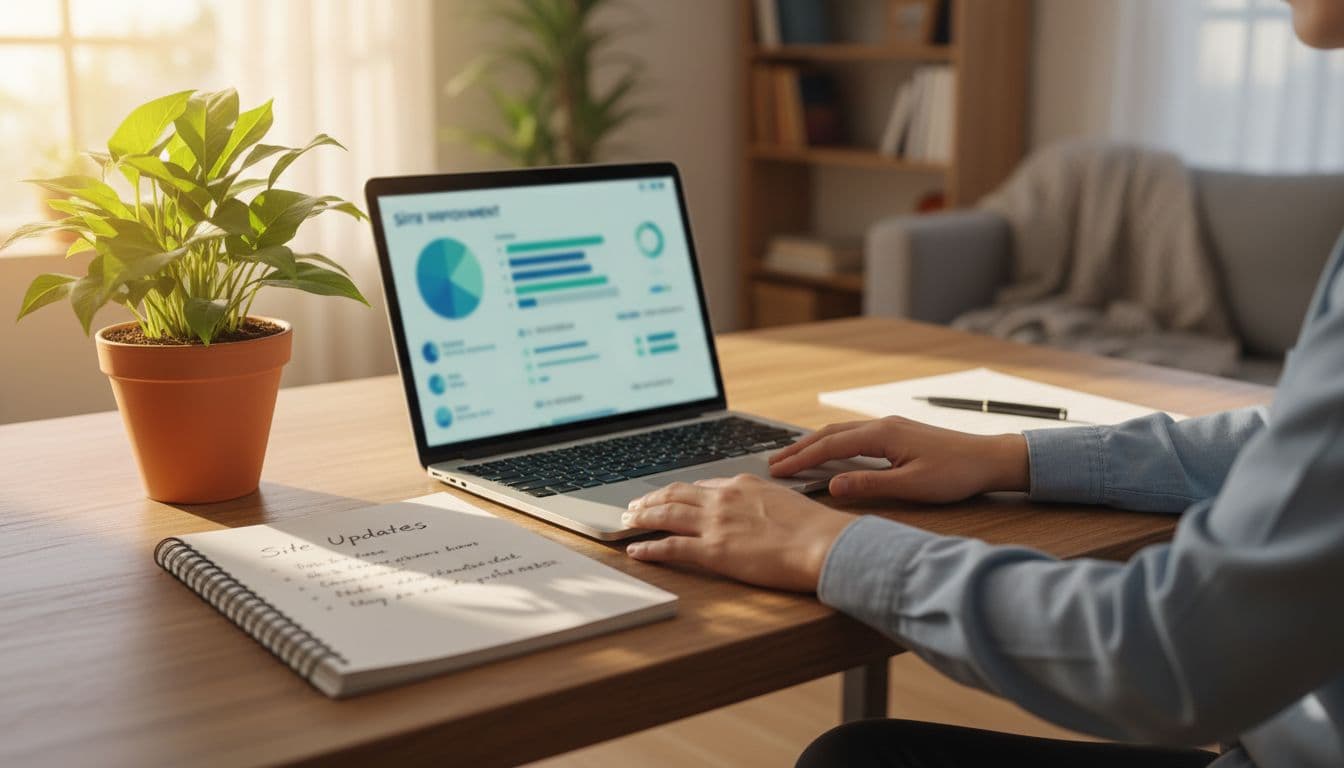
This is also the right time to expand carefully. If one topic is gaining traction, branch into nearby questions, comparisons, and product guides. That’s how a site grows without turning into a mess. Patience matters here. So does consistency. Most good sites don’t explode overnight. They build momentum, one smart update at a time.
In Closing
If you want to start a business from home, the path is a lot simpler when you stop trying to do everything at once. First, learn how affiliate marketing works. Then choose a niche you can stay with, build a simple site, publish helpful content, and keep improving what gets results.
That’s why Wealthy Affiliate can be a solid place to begin. It gives beginners training, website tools, hosting, keyword help, AI support, and a community, all in one spot. If you still want a little extra nudge, this guide to starting your affiliate marketing journey this year fits well with the steps above.
Still, tools don’t build the business for you. Consistency does. I learned that the hard way, and most beginners do too.
So start small. Pick one niche, publish your first post, and keep going. A real home-based business usually begins with one clear step, followed by the next.
Frequently Asked Questions
What is the easiest way to start a business from home?
Affiliate marketing is one of the simplest ways to begin because you don’t need to create products or manage shipping. You focus on helping people through content and earn commissions when they buy through your links.
Do I need technical skills to start affiliate marketing?
No. Platforms like Wealthy Affiliate guide you through building a website, choosing a niche, and publishing content without needing coding or advanced technical knowledge.
How long does it take to make money with affiliate marketing?
Most beginners do not see results immediately. It often takes weeks or months of consistent content and learning before traffic and commissions start to build.
What does Wealthy Affiliate provide for beginners?
Wealthy Affiliate offers training, website hosting, keyword research tools, AI writing support, and a community. It brings the main tools needed to start into one place.
How do I choose a good niche for my website?
Choose something you understand or enjoy, and make sure people are actively searching for help or products in that space. A focused niche is easier to grow than a broad one.
What type of content works best for beginners?
Simple content like how-to guides, product comparisons, reviews, and beginner tutorials works well. These match what people are already searching for.
Do I need to publish content every day?
No. Consistency matters more than frequency. One or two helpful posts per week is enough to build momentum over time.
Where does traffic come from in affiliate marketing?
Most long-term traffic comes from search engines. Social media and email can help, but search traffic tends to be the most consistent source.
How do affiliate links actually make money?
When a reader clicks your affiliate link and makes a purchase, you earn a commission. Your role is to help them make a better decision through useful content.
What is the most important step to succeed?
Stay consistent. Publish helpful content, learn from your results, and improve over time. Most people quit too early before the results start to build.




I found the article really practical in breaking down how someone can start a business from home, especially with affiliate marketing and simple steps laid out for beginners who might feel overwhelmed by tech or startup costs. I like that it doesn’t promise overnight success but instead focuses on building helpful content, choosing a niche you care about, and being consistent with publishing and learning as you go. The emphasis on understanding the business model before jumping in really stood out to me. What do you think is the most important first step for someone who has no idea what niche they want to start with?
Thanks for stopping by, Hanna.
I think the most important step in niche selection is not worrying about what the crowd is doing and finding your own corner of the internet. There are loads of people all over the world searching for all kinds of things. If you can create content on anything that interests you, I can almost guarantee there are others who want to learn what you have to teach. Anything you can continue to provide information about without losing interest will usually be the best niche for you. Always provide value over sales, and you will do great.
Michael
I’m a stay-at-home mom searching for ways to assist my husband with our family’s finances, and the idea of starting an online business from home is both exciting and intimidating. I appreciate how clearly you explained the process, especially the reminder that affiliate marketing is not a “get-rich-quick” scheme; it requires consistency and patience to grow.
I like that Wealthy Affiliate offers all the tools in one place, as the thought of piecing everything together on my own feels overwhelming. The examples you provided, such as creating helpful content around everyday topics, make the process feel more achievable and less abstract.
For someone who is brand new to this, how do you know when it’s the right time to upgrade from the free starter plan to a paid one? I would love to hear your thoughts on the signs that indicate you are ready to take that next step.
When I joined, I upgraded right after the initial training module ended to access the advanced training because I was impressed by the content. I was not disappointed because the advanced training was much better. That said, upgrading is an investment in oneself, and not everyone can do it right away. That said, the best answer to your question would be when you can both afford to invest in your future, and you are ready to build something real.
Michael