

What AI Books Teach, and Which Ones Are Worth Reading
When people ask what AI books really teach, they usually mean something simple: which books help you understand artificial intelligence instead of talking around it. The useful ones make hard ideas easier to follow, give you a way in, and leave you with something you can use.
That matters because not every reader wants the same thing. Some want the basics. Some want help using AI tools for work. Others want the technical side, or a clearer sense of how AI may affect jobs and daily life. The best choice depends on where you’re starting and what you want next.
What makes an AI book actually useful to learn from
A useful AI book doesn’t try to sound smart at your expense. It explains one idea at a time, keeps the structure clean, and gives you enough context to understand why the topic matters. You should feel steadier as you read, not more lost.
Some books are strong on core ideas. Others are better for practice, such as using AI tools for writing, research, websites, or an online business. A few are built for deeper study and expect math, code, or both. None of these are wrong. They simply do different jobs.
A good AI book should make each chapter feel clearer than the last.
Clear explanations without too much jargon
The best teaching books use plain English first. If they introduce terms like machine learning, neural networks, or large language models, they define them in place and then keep moving. That makes a big difference for beginners.
Books like AI: A Guide for Thinking Humans work well because they explain what AI can and can’t do, and why people often misunderstand it. That kind of framing builds confidence. It also helps readers sort hype from reality.
Examples, stories, and hands-on learning
People remember examples more than definitions. A book that shows AI making odd mistakes, producing biased results, or failing in funny ways often teaches better than a book full of abstract theory.
That’s one reason approachable titles like You Look Like a Thing and I Love You stick with readers. They use stories and real cases to make the ideas easier to hold onto. On the practical side, books that include prompts, workflows, or small projects are often the fastest way to turn reading into a skill.
The main types of AI books and who they are for
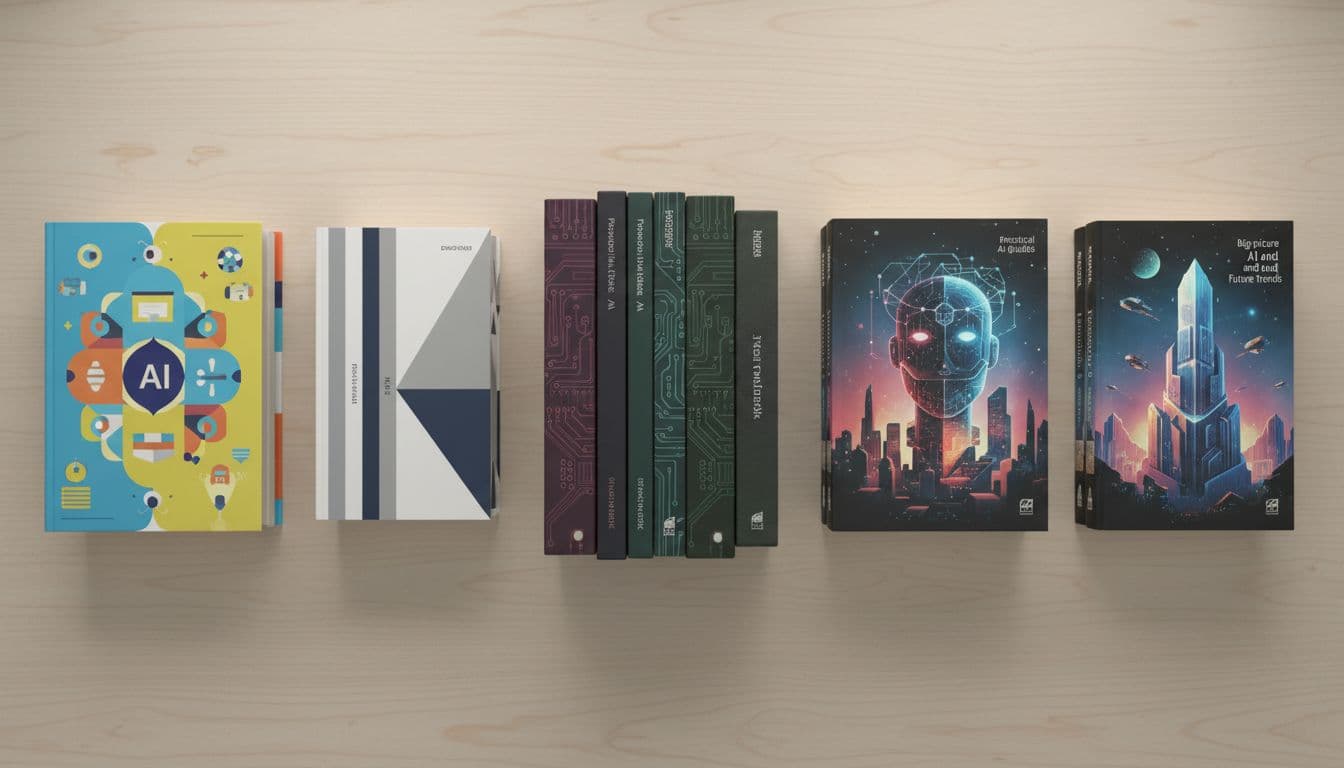
AI books are not all trying to do the same job. Some help complete beginners get comfortable. Some explain how the systems work under the hood. Others focus on using AI in everyday work. Then there are books that step back and ask what all of this means for society.
 Yes, there are many excellent free alternatives, such as university course lecture notes, technical documentation, and open-access research papers available online. Websites like Coursera and Khan Academy also offer free introductory tracks that provide a strong foundation similar to beginner-friendly books.
Quick summary of our top book recommendations
| Book Title | Category | Best For |
|---|---|---|
| AI: A Guide for Thinking Humans | Beginner | Understanding fundamentals |
| You Look Like a Thing, and I Love You | Beginner | Learning through examples |
| Co-Intelligence | Practical | AI in everyday work |
| Hands-On Machine Learning | Technical | Building AI projects |
| Life 3.0 | Big-Picture | Ethics and future impact |
Find this list and further descriptions on my Benable list.
Beginner-friendly books that explain AI in plain language
If you’re new, start with books that lower the barrier. You should not need a computer science degree to get the point. The best beginner books explain the main ideas, common limits, and basic history without overloading you.
AI: A Guide for Thinking Humans is a strong place to start for clear fundamentals. You Look Like a Thing, and I Love You is also beginner-friendly, especially if you learn better through examples and humor. Kevin Warwick’s Artificial Intelligence: The Basics is another simple entry point, and Fei-Fei Li’s The Worlds I See adds a human perspective to the field.
 These books are useful because they build a base. Once you have that base, later books make more sense.
Practical books for people who want to use AI tools now
Some readers don’t want a long theory lesson. They want to know how to work with AI today. That includes writing, research, content planning, customer support, website development, and small-business tasks.
This is where books like Ethan Mollick’s Co-Intelligence stand out. It treats AI as a working partner and focuses on habits, limits, and everyday use. For creators and online business owners, this type of book is often the most useful because it helps you apply AI rather than admire it from a distance.
Newer books can help here because tools change fast. A title like AI Engineering by Chip Huyen is more technical, but it also helps readers think about how AI gets used in real projects, not only in theory.
Technical books for readers who want to build AI skills
Technical books are for readers who want more than a surface view. These books usually cover machine learning, model training, code, data, or system design. They are best when you already know the basics and are ready to study with more patience.
Artificial Intelligence: A Modern Approach remains one of the most widely used textbooks for in-depth study of AI. It is broad, serious, and better suited to structured learning than to casual reading. Hands-On Machine Learning is often easier for people who learn by building, because it moves through projects and examples. For readers focused on current model work, books like The LLM Engineering Handbook can be a useful next step.
 These books teach more, but they also ask more from you.
Big-picture books that explain AI’s future and impact
Some AI books are less about tools or code and more about consequences. They look at work, ethics, risk, and how AI may shape decision-making in the years ahead.
Life 3.0 is a well-known example. It asks larger questions about society and the future without turning into pure science fiction. Books in this category are useful once you understand the basics, because they help you place AI in a wider context. They don’t replace practical learning, but they do round it out.
How to choose the right AI book for your goal
The right AI book depends on the result you want. If you choose a book that matches your current level, you’ll learn faster and stick with it longer. If you start too far above your comfort level, even a good book can feel like the wrong one.
Pick based on your current skill level
Beginners usually do best with plain-language books that explain concepts first. Intermediate readers often want books that connect ideas to real tools or projects. Advanced readers are usually better served by textbooks, coding guides, or engineering-focused titles.
This sounds obvious, but it saves time. A simple book that you finish will teach you more than a dense book that sits half-read on your desk.
Pick based on the result you want
Ask one clear question before you buy: Do you want to understand AI, use AI, or build AI? Those are different goals. A concept book helps with literacy. A practical book helps with work. A technical book prepares you for deeper study.
It also helps to balance newer and older titles. Recent books are often better for current tools and workflows. Older classics still matter because core ideas do not change as fast as product names do.
The Final Chapter
The best AI books teach something real. Sometimes that’s the basic logic behind AI. Sometimes it’s a practical way to use the tools. Sometimes it’s the larger picture around work, ethics, and change.
Start with the book that fits your level and your reason for learning. Then build from there. AI is easier to learn step by step, and the right book makes that step small enough to take.
Frequently Asked Questions
What are the best AI books for beginners?
The best beginner AI books explain artificial intelligence in plain language without assuming you know code or computer science. Good starting points include AI: A Guide for Thinking Humans and You Look Like a Thing and I Love You.
What should an AI book teach?
A useful AI book should explain core ideas clearly, define terms like machine learning and neural networks, and help readers understand what AI can and cannot do. The best ones make each chapter easier to follow than the last.
Are practical AI books better than technical AI books?
It depends on your goal. Practical AI books are better if you want to use AI tools for writing, research, websites, or business tasks. Technical AI books are better if you want to learn coding, machine learning, model training, or AI system design.
Which AI books are best for learning how to use AI at work?
Books like Co-Intelligence are useful for learning how to treat AI as a working partner. These books focus on habits, limits, workflows, and practical use instead of deep technical theory.
How do I choose the right AI book?
Start by asking whether you want to understand AI, use AI, or build AI. Beginners should choose plain-language books. Practical users should choose books with workflows and examples. Technical readers should look for textbooks or hands-on coding guides.